 Patient Login
 (201) 581-6100
Treating And Managing Peripheral Artery Disease
Peripheral Artery Disease, or PAD is a common disease of the arteries. This highly prevalent disease affects one in every 20 Americans over the age of 50, affecting a total of 8-12 million people in the USA alone.
Since peripheral arterial disease increases the risk of heart attacks and strokes, both of which can be fatal, it is often asked – is peripheral artery disease a death sentence? However, PAD is a highly treatable disease and can be easily managed with an improved lifestyle in its early stages.
In the case of advanced stages, you may need to take medications or undergo surgery to improve the condition. Overall, when treated timely, PAD is non-life-threatening.
Identifying Peripheral Artery Disease
PAD is a common disorder, generally affecting people aged 50 and above. Characterized by the narrowing of blood vessels due to plaque buildup, PAD presents a range of symptoms and risk factors.
Risk Factors Of PAD
Multiple factors can put you at a higher risk of peripheral artery disease. These include:
- Smoking
- High cholesterol level
- Heart diseases such as coronary artery disease
- Diabetes
- High blood pressure or hypertension
- Kidney disease
- Low physical activity
- Stress
PAD Symptoms
PAD presents with a range of symptoms, which differ in each case. A few common symptoms include:
- Leg pain while walking
- Muscle pain or cramping
- Coldness in the extremities
- Leg weakness or numbness
- Weak or no pulse in the legs
- Shiny skin on the legs
- Changed skin color on the legs
- Slow-growing toenails
- Sores on the toes
- Hair loss or slower hair growth on the legs
If you have any of these symptoms, especially with a risk factor for PAD, you should consult a peripheral artery disease specialist immediately to seek proper diagnosis and peripheral artery treatment.
Diagnosing PAD
Your doctor will begin with a physical exam to diagnose peripheral artery disease. This includes checking for pulse in the extremities and measuring your blood pressure. In addition, the doctor may look for symptoms like muscle atrophy, sores, and hair loss. Further, you may be given blood tests to check for cholesterol levels and diabetes. Other tests for diagnosing PAD include leg angiography, doppler ultrasound, and CT angiography.

Can Peripheral Artery Disease Cause Death?
As mentioned above, PAD is a highly manageable and treatable disease and only raises the risk of fatal conditions like heart attack or stroke in extreme cases. In general, PAD can be easily treated through a combination of medications and healthy lifestyle practices.
Based on the symptoms, tests, occurrence, and severity, your healthcare practitioner will suggest a suitable peripheral artery treatment. Generally, the following methods are used:
Lifestyle Changes
If you are at risk of peripheral artery disease or the disorder is in its early stages, a few lifestyle changes can help you manage and prevent the disease. These include:
- Smoking cessation and refraining from tobacco use
- Exercising regularly Consuming a healthy diet
- Stress management to help maintain blood pressure
- Maintaining a healthy weight
- Consuming a low-fat and low-cholesterol diet if you have high cholesterol
- Monitoring your blood sugar in case of diabetes
Medications
Medications are generally given to help manage the risk factors and symptoms associated with peripheral artery disease.
- Statins help lower bad cholesterol and, therefore, reduce plaque buildup.
- Blood pressure medication to maintain blood flow
- Diabetes medication to maintain blood sugar levels
- Medications to prevent blood clots
- Pain-killers to help manage pain associated with PAD
Surgery
- In advanced cases of PAD where the atherosclerosis is high, you may need to undergo surgery. Depending on your particular condition, you may be suggested:
- Thrombolytic therapy to help dissolve any blood clot that may be blocking the artery
- Angioplasty and stent placement to help remove the plaque buildup and keep the artery open
- Bypass surgery to create a new path for blood flow in case the artery is completely blocked
- Therefore, when diagnosed in a timely manner and treated properly, peripheral artery disease can be easily managed. This is vital to prevent further complications such as tissue death, stroke, and heart attack.

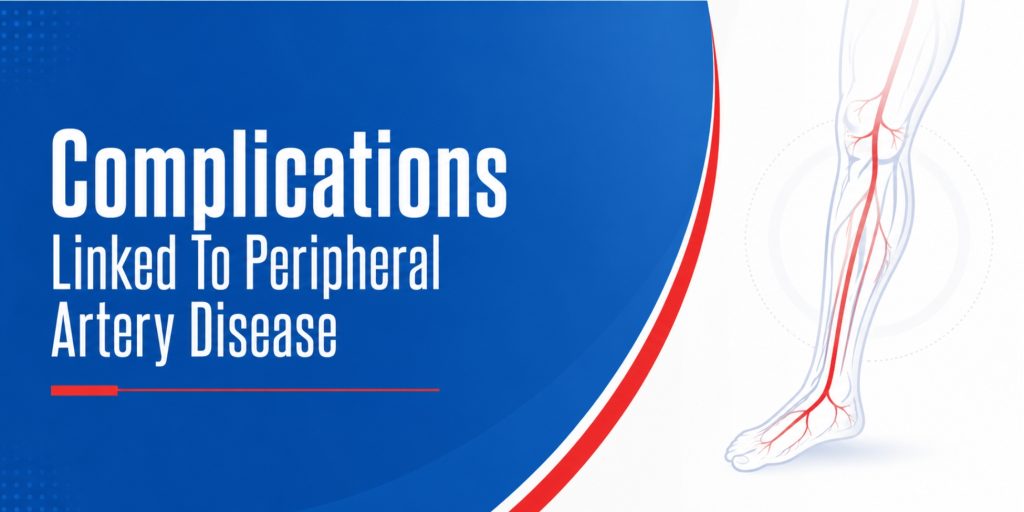
Complications Associated With PAD
Peripheral Artery Disease affects more than 230 million people worldwide. Besides causing symptoms like pain and numbness, this common problem can also lead to various complications due to decreased blood flow.
Apart from putting you at a greater risk of heart attack and stroke, the following are a few complications commonly associated with PAD:
Amputation:
If your PAD is associated with diabetes and is left untreated, the impaired blood flow can lead to slow or non-healing ulcers, which can get easily affected. Another possibility is the development of gangrene. These conditions can eventually lead to the need for amputation.
Impaired Healing:
Since PAD slows down the blood flow, it prevents your extremities from healing normally. Therefore, it is advised to seek special care for any injuries and ulcers, especially in your leg, if you are a PAD patient.
Lower Quality Of Life:
The different symptoms associated with PAD, especially pain, can limit a patient’s mobility, disturbing their daily routine and therefore lowering the quality of life.
Tips To Prevent PAD
While peripheral artery disease is a common problem, it can easily be prevented with a few lifestyle changes. The key to preventing PAD is keeping your heart healthy and taking measures to prevent or manage the associated risk factors.
You can inculcate the following habits to help prevent PAD:
- Manage your weight
- Consume a well-balanced diet with fruits and vegetables
- Limit your intake of fatty food
- Avoid tobacco products
- Exercise for at least 30 minutes daily
We Can Help Manage Your PAD
If you suspect you have peripheral artery disease and feel symptoms like shortness of breath, leg pain, redness or swelling in the legs, cold or pale legs, sores, and infection, you must visit a doctor immediately.
At Advanced Medical Group, our experts can provide a quick diagnosis and an effective treatment plan for peripheral artery disease. With our top-notch services and a low PAD treatment cost, we help ensure that you live a symptom-free life with no risk to your health in the long term. Our doctors will develop a holistic treatment plan for your condition, helping improve your overall health.