 Patient Login
 (201) 581-6100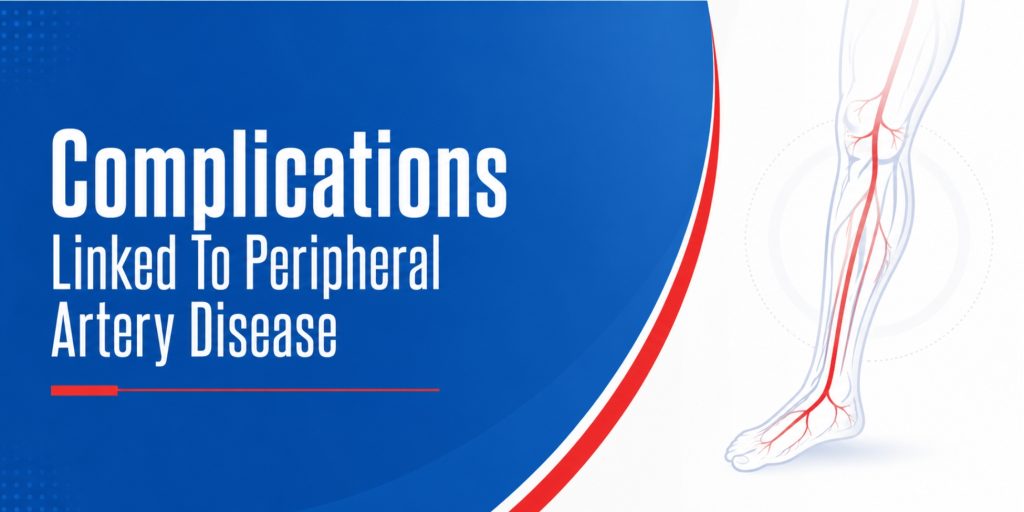
Complications Linked To Peripheral Artery Disease And Why Early Treatment Matters
Most people hear “poor circulation” and think cold feet. Maybe some leg cramps. Nothing too serious.
That’s a dangerous assumption.
Peripheral artery disease doesn’t just slow blood flow to your legs. Left unchecked, the complications linked to peripheral artery disease can affect your heart, your brain, and in severe cases, your ability to walk at all. PAD is a systemic vascular condition — and its consequences reach far beyond tired legs.
Here’s what most people don’t realize: the real threat isn’t PAD itself. It’s what comes next.
Chronic Leg Pain That Doesn’t Let Up
Early on, PAD symptoms might only show up when you’re walking or climbing stairs. A cramping sensation in the calves or thighs. You stop, rest, and it fades. Doctors call this claudication.
But as the disease progresses, that pain stops being occasional. It becomes constant. Sitting down doesn’t help. Lying in bed doesn’t help. Some patients describe it as a deep, burning ache that wakes them up at night.
This kind of rest pain signals that blood flow has dropped to critically low levels. And once you’re at that stage, the complications of peripheral artery disease become much harder to manage.
Non-Healing Wounds and Tissue Damage
Here’s where things get serious fast.
When circulation drops below a certain threshold, your body loses its ability to heal. A small cut on the foot, a blister from a shoe, a cracked patch of dry skin — these minor injuries can turn into open wounds that simply won’t close.
Vascular specialists call these ischemic ulcers. They’re painful, prone to infection, and notoriously stubborn. Without an adequate blood supply delivering oxygen and nutrients to the tissue, the healing process essentially stalls.
And that creates a cascading problem. Infection sets in. The tissue around the wound starts to break down. What started as a small sore becomes a medical emergency.
Amputation — The Complication Nobody Wants To Talk About
It’s the outcome every patient fears. And it’s a real one.
When tissue damage advances far enough — when infection spreads and blood flow can’t be restored — amputation may become the only option to prevent life-threatening complications. This is most common in the toes and feet, but it can extend higher.
Medical research has shown that patients with critical limb ischemia, the most severe form of PAD disease, face a significant risk of limb loss within a year of diagnosis. That’s not meant to scare you. It’s meant to underscore why PAD treatment matters before things reach that point.
Heart Attack And Stroke Risk
This is the complication that catches people off guard.
PAD doesn’t happen in isolation. The same vascular disease narrowing the arteries in your legs is often doing the same thing in your coronary and cerebral arteries. That means the complications linked to PAD extend directly to your heart and brain.
Patients with peripheral artery disease are significantly more likely to experience a heart attack or stroke compared to the general population. Cardiovascular health guidelines consistently flag PAD as a major risk marker for these events.
And that’s the problem — many patients and even some primary care providers treat PAD as a leg issue. It’s not. It’s a whole-body vascular issue with whole-body consequences.
Blood Clots And Acute Limb Ischemia
Narrowed arteries don’t just restrict flow. They create the conditions for clots to form.
When a blood clot suddenly blocks an already compromised artery, it can cut off circulation to the limb entirely. This is called acute limb ischemia, and it’s a vascular emergency. The leg becomes cold, pale, numb, or intensely painful — sometimes within hours.
Without rapid intervention, the tissue downstream from the blockage starts to die. This complication of peripheral artery disease requires immediate medical attention. Hours matter.
Reduced Mobility And Quality Of Life
Not every complication is a dramatic medical event. Some are slow, grinding, and deeply personal.
Patients with progressing PAD often find their world getting smaller. Walking to the mailbox becomes a chore. Grocery shopping exhausts them. They stop exercising because it hurts. They stop going out because they can’t keep up.
This loss of mobility feeds into depression, social isolation, and physical deconditioning, which in turn makes the vascular disease worse. It’s a cycle that’s difficult to break without addressing the underlying circulation problem.
PAD symptoms like leg fatigue and cramping might seem manageable at first. But over months and years, they quietly erode independence.
Kidney Complications
The vascular damage associated with PAD disease can also affect the renal arteries. When blood flow to the kidneys is compromised, it can contribute to high blood pressure that’s difficult to control and, over time, declining kidney function.
This connection isn’t always obvious. But vascular specialists emphasize that patients diagnosed with peripheral artery disease should have their kidney health monitored regularly. The complications linked to peripheral artery disease don’t stop at the legs.
Why Early PAD Treatment Changes The Outcome
Every complication listed above has one thing in common: it’s more likely when PAD goes undiagnosed or untreated.
Early intervention works. Lifestyle modifications, medication management, and when necessary, minimally invasive procedures to restore blood flow can dramatically change the trajectory of this disease. PAD treatment isn’t about eliminating all risk — it’s about keeping the disease from progressing to the point where these serious complications take hold.
Recognizing PAD symptoms early — leg pain with activity, slow-healing sores, coldness or discoloration in the feet — gives you and your care team the best shot at staying ahead of it.
Taking the Next Step
If any of this sounds familiar, don’t wait for things to get worse. A vascular evaluation can clarify where you stand and what your options are.
Advanced Medical Group offers vascular assessments for patients concerned about peripheral artery disease and its complications. Getting answers early is the single most effective thing you can do — and it starts with a straightforward conversation with a vascular specialist.