
 Patient Login
 (201) 581-6100
Internal Medicine Vs Family Medicine: Things You Should Know
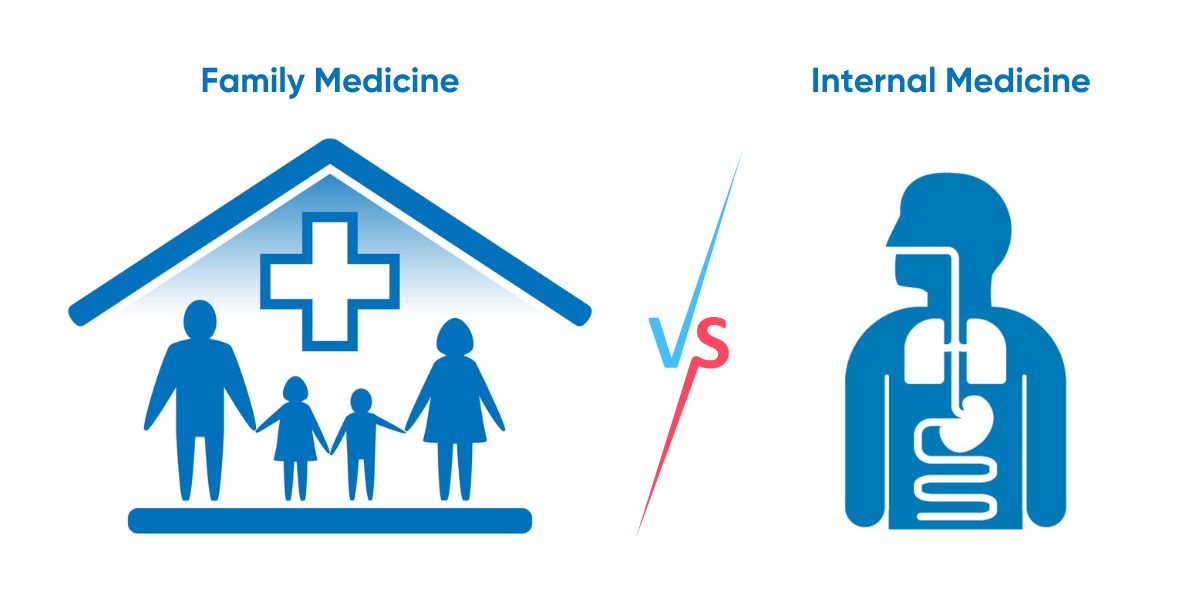
If you are a medical student exploring career options in primary care, you must have been facing the crossroads of family medicine and internal medicine. Despite being part of the same specialization, both career options differ greatly. Generally, people know that family medicine provides a broad spectrum of treatment by covering all age groups, whereas internal medicine is specific to adults.
But many more differences are still untapped among common people and even for the students pursuing medicine. Therefore, we have brought you an interesting showdown called internal medicine vs family medicine to understand the differences between these two sub-specializations.
Differences Between Family Medicine And Internal Medicine
| Factors | Internal Medicine | Family Medicine |
|---|---|---|
| Doctors | Emergency care and critical treatment | Day to day health care |
| Services | Cardiology, Gastroenterology | General adult care |
| Prevent care | Disease management for adult population | Health maintenance |
| Training | Internal organ system | Pediatrics, Obstetrics/Gynecology, Psychiatry, and Internal medicine. |
| Common Procedures | Endoscopies, Colonoscopies, and other diagnostic tests | Well-child exams, Prenatal care, Minor surgeries |
| Treatment Methodology | Cardiac diseases, Trauma, and Neurological disorders. | Routine health care systems and General medicine |
| Age group | 18 and above | Birth to death |
Age Group
The most common difference between family medicine and internal medicine is the accountable age group. Internists are more likely to treat patients who are above 18 years old. But family medicine includes sub-branches like pediatrics and child care, which provide treatment for a wider age group starting from a few months to several years. Let’s understand the difference based on age group a bit more.
Internal Medicine For Age Group
- Specific care for the adult group aged 18 to 65 is provided by internal medicine.
- Internists are specialized in the diagnosis, prevention, and treatment of adolescents.
- They have a comprehensive knowledge of medicinal and tolerance effects on the adult age group.
Family Medicine For Age Group
- Treat a diverse range of patients, starting from infants to seniors.
- Family medicine doctors are specialized in general medicine and provide comprehensive care to all age groups.
- It provides a more family-focused approach, including pediatrics, adolescents, and geriatric care.
Internal Medicine Doctors vs Family Medicine Doctors
Internal and family medicine are the branches of common specialization known as primary care. Therefore, the foundation of these two categories is pretty much similar. However, we can find the differences easily if we go deep into the curriculum. Let’s have a wider discussion on the difference between internists and family medicine doctors.
Internal Medicine Doctors
- Practitioners undergo a typical three-year course focusing on specialized care of diseases affecting adults.
- More focused curriculum on emergency care and critical treatment.
- Practice of emergency medicine and wide exposure to hospital-based care.
- Experienced in handling critical cases like trauma, accidents, and many more.
Family Medicine Doctors
- Family medicine is also a complete three-year course but focuses more on general care for all age groups.
- The curriculum is more focused on common diseases and day-to-day health care.
- Family medicine doctors have less exposure to typical hospital environments and serve our patient departments more prominently.
Treatment Methodology
Treatment methodology in these two specializations is diverse and can be a pinpoint differentiator between them. Internal medicine specialists must adopt more complex treatment methods than family medicine doctors. Here are some clear justifications for this note.
Methodology In Internal Medicine
- Adopted for treating complex cases and high-risk diseases like cardiac diseases, trauma, and neurological disorders.
- Internists are trained to make fast-paced decisions in emergency conditions like accident cases.
- Internist specialists have a vast knowledge of life-saving drugs and the use of anesthesia.
- Internal medicine also includes surgeries in critical situations.
Methodology In Family Medicine
- Family medicine is oriented towards routine health care systems and general medicine.
- Family medicine doctors also play a vital role in health education and preventive care.
- They also take a holistic approach to ensure long-term effectiveness.
- Family medicine doctors are also trained for community health care systems.
Career Opportunities
Career opportunities are an important perspective for students who are pursuing medicine and want a stable career ahead. Generally saying, both the branches have vast career options. But there might be differences according to interests and choose subfields. Let’s have a comprehensive differentiation for it.
Internal Medicine Careers
- Internists most often pursue career options in hospital and emergency medicine. They are involved in managing complex medical issues and coordination with specialists.
- Internal medicine also has a wide scope for joining as sub-specialists in internal medicine departments such as cardiology, gastroenterology, and neurology.
- Most internists join the accident care and critical care department to manage critically ill patients.
Family Medicine Careers
- Family medicine doctors often provide consultation services to patients and other physicians.
- Specialists in family medicine have a wide range of opportunities in community care and preventive care services at rural and urban hospitals.
- They also have a wider scope to join outpatient departments for treating chronic yet common disorders like hypertension, diabetes, and infectious diseases.
Internal Medicine Vs Family Medicine – FAQs
-
1. Can family medicine doctors work in hospitals, and do internal medicine doctors have opportunities for outpatient care?
Family medicine doctors focus on providing comprehensive healthcare across all age groups, while internal medicine doctors specialize in diagnosing and treating adult diseases.
-
2. Can family medicine doctors work in hospitals, and do internal medicine doctors have opportunities for outpatient care?
Family medicine doctors can work in hospitals, and internal medicine doctors can provide specialized outpatient care in clinics.
-
3. Do family medicine doctors have the option to specialize in certain areas, similar to internal medicine doctors?
While family medicine doctors have a broad scope, some may choose to specialize in areas like sports medicine or geriatrics. Internal medicine doctors can pursue subspecialties for a more focused practice.
-
4. How do family and internal medicine doctors contribute to preventive care and community health?
Family medicine doctors emphasize preventive care and community health initiatives, while internal medicine doctors may contribute to preventive care and community health through specialized clinics and outreach.
-
5. Are family medicine and internal medicine doctors involved in interdisciplinary collaboration, and how does this benefit patient care?
Yes, family and internal medicine doctors collaborate with other healthcare professionals in interdisciplinary teams, enhancing patient care through a comprehensive and coordinated approach.
Your Primary Care Journey Begins Here
Both family medicine and internal medicine serve as essential pillars in the healthcare system. While they differ in scope and approach, each holds equal importance in delivering quality care to the community. The Advanced Medical Group believes both areas will improve more with the upcoming advancements and will mark revolutionary changes for the healthcare systems.