 Patient Login
 (201) 581-6100
What Are Some Pelvic Floor Physical Therapy Exercises You Should Know About?
What are some pelvic floor physical therapy exercises? And how are they different from general pelvic floor workouts?
Unlike basic Kegels, physical therapy pelvic floor exercises use specific movements to retrain the pelvic floor muscles. These exercises are designed to help the muscles contract, relax, and coordinate with the rest of the body.
Pelvic muscles play a direct role in bladder and bowel control. It responds to breathing, posture, and changes in abdominal pressure. You feel it when sitting, standing, lifting, or coughing.
When these muscles also get weak, overactive, or poorly coordinated, a wide range of symptoms may develop. You may have leakage, discomfort, a feeling of heaviness, or difficulty maintaining control during routine activities.
Over time, doing pelvic floor physical therapy exercises can help restore muscle control and improve endurance.
What Are Some Pelvic Floor Physical Therapy Exercises Recommended By Professionals?
Physical therapists consider various factors before recommending exercises. Overall muscle control and the ability to contract and relax the pelvic floor muscles generally play an important role here.
The pelvic floor responds to breathing, posture, and changes in pressure during movement. That’s why the pelvic floor physical therapy exercises are designed to work with the rest of the body.
The exercises use a structured progression that starts with awareness and control, then moves toward strength, endurance, and functional use.
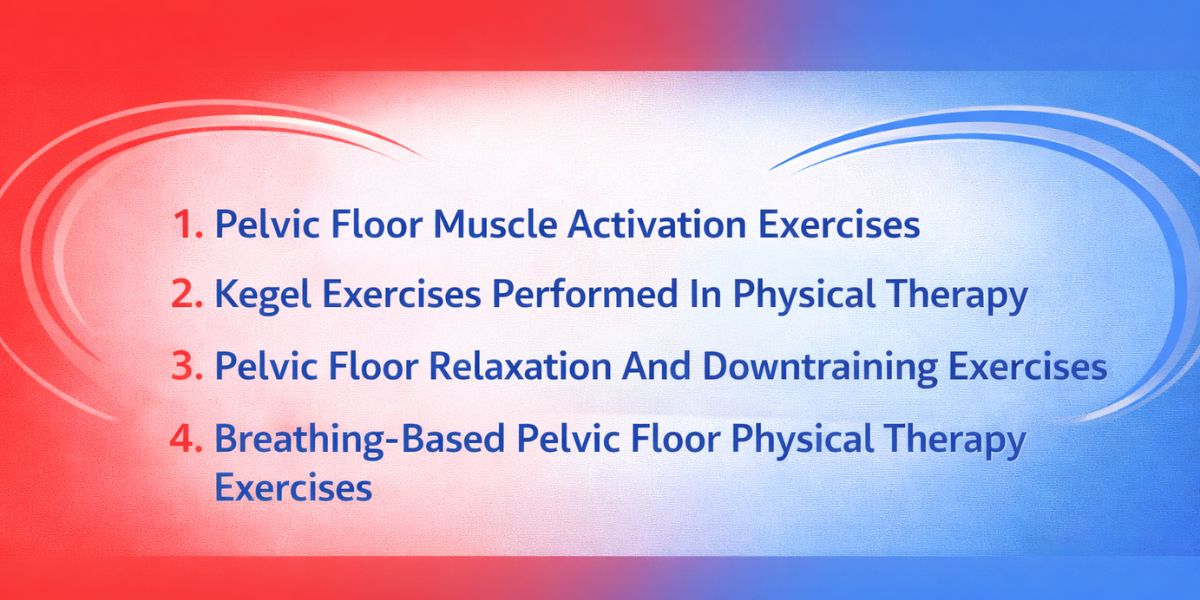
1. Pelvic Floor Muscle Activation Exercises
The muscle activation exercises are often the starting point in physical therapy. Many people cannot correctly identify or engage these muscles on their own.
Through the activation exercises, you learn to do controlled contractions without relying on surrounding muscles like the glutes, thighs, or abdominals.
These exercises emphasize precision over force. You’ll have to contract the pelvic floor gently and then fully relax it. This will help establish proper muscle awareness and control.
Without this step, strengthening exercises are often ineffective or performed incorrectly. Through these activation exercises, physical therapists also assess how well your pelvic floor muscles respond. This assessment plays a crucial role in determining how the exercise program will be designed.
2. Kegel Exercises Performed In Physical Therapy
Kegels are one of the most well-known physical therapy exercises for the pelvic floor. Yet, few people know how to do them properly. In physical therapy, Kegels don’t mean simply doing repeated squeezing motions. They are controlled movements, followed by complete release.
To do the Kegel properly, you have to lift the pelvic floor in a measured way and then let it return to rest. Your physical therapist may adjust how long you need to hold the contraction and how often you need to repeat it.
Some people need quick contractions to improve response and control. Then, there are others who benefit from slower and more sustained holds.
When Kegel exercises are guided and customized to your specific needs, they become a precise tool instead of a generic exercise.
3. Pelvic Floor Relaxation And Downtraining Exercises
Some pelvic floor issues aren’t related to weakness. In such cases, the muscles are already active but remain tense for too long.
This constant tension can cause issues with the bladder, bowel movements, and pain control. Relaxation or down-training exercises are used to reduce excessive muscle activity. They also help restore normal resting tone.
These exercises focus on lengthening the pelvic floor rather than contracting it. Your physical therapist will guide you through slow breathing patterns. It will allow your pelvic floor to lower and soften with each inhale. The therapist may also ask you to move your hips gently to support this release.
Over time, downtraining helps improve muscle flexibility and reduces discomfort. It also makes it easier for the pelvic floor to respond appropriately.
4. Breathing-Based Pelvic Floor Physical Therapy Exercises
Breathing plays a direct role in how the pelvic floor functions. With each breath, the diaphragm and pelvic floor move together to manage pressure inside the abdomen.
When breathing patterns are shallow or held, this natural coordination gets disrupted. Breathing-based pelvic floor physical therapy exercises can restore this relationship.
Your physical therapist will teach you to breathe in a way that allows the rib cage to expand and the pelvic floor to gently descend. When you exhale, the pelvic floor will naturally recoil and lift.
5. Core And Pelvic Floor Coordination Exercises
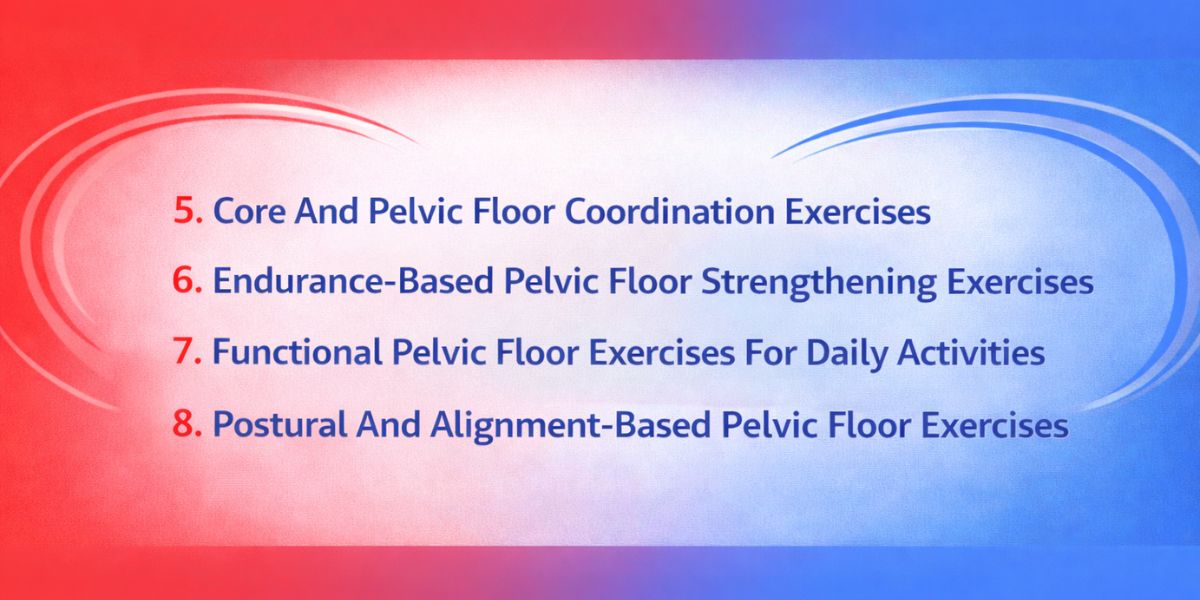
The pelvic floor works closely with the deep abdominal and spinal muscles to support the body during movement. Coordination exercises focus on training these muscles to activate together.
When doing these exercises, you have to gently engage your core while doing controlled pelvic floor activation. These are slow and deliberate movements.
The goal is to maintain control of the pelvic floor while changing positions. So, you will go from lying down to sitting or standing. Doing this improves coordination.
6. Endurance-Based Pelvic Floor Strengthening Exercises
Endurance training focuses on how long your pelvic floor muscles can sustain a contraction without fatigue. This is different from the short, powerful contractions.
Endurance is essential for maintaining continence throughout the day, especially during activities like walking, standing, or working. Experienced physical therapy specialists introduce endurance exercises gradually.
They may ask you to hold a gentle pelvic floor contraction for several seconds while maintaining normal breathing. There will be rest periods built into the exercise so that the muscles aren’t overworked.
Over time, you will be asked to do longer and higher reps of the exercise. This type of training supports long-term function.
7. Functional Pelvic Floor Exercises For Daily Activities
These exercises train the pelvic floor to respond appropriately during common activities. So, you can sit down, stand up, bend, or lift light objects without experiencing unpleasant symptoms.
The focus here is on timing rather than force. Your physical therapist will ask you to engage or relax the pelvic floor at specific times during movement.
For example, the muscles may activate just before a change in posture or release during rest. This approach helps the pelvic floor to adapt to everyday demands.
Functional training is a critical step in physical therapy. That’s because it ensures the improvements carry over into your daily routines.
8. Postural And Alignment-Based Pelvic Floor Exercises
Posture has a direct impact on how the pelvic floor is loaded. Poor alignment can place constant pressure on the pelvic floor muscles. Over time, it can also reduce their ability to contract and relax effectively.
That’s why physical therapy services often recommend postural exercises. These exercises focus on improving pelvic alignment, spinal positioning, and weight distribution.
Even making small adjustments in your posture can significantly change how the pelvic floor functions. Physical therapists use these exercises to reduce unnecessary strain.
Over time, as your posture improves, you will have fewer symptom flare-ups during prolonged sitting or standing.
Seek Care From Qualified Physical Therapy Professionals
Pelvic floor physical therapy exercises are most effective when they are guided by qualified professionals. Many people shy away from seeking professional help beause of physical therapy cost.
However, neglecting this can worsen your symptoms and significantly reduce your quality of life. That’s why seeking treatment early is crucial.
Clinics such as Advanced Medical Group provide access to licensed physical therapists who offer structured and evidence-based care.