 Patient Login
 (201) 581-6100
Occupational Therapist vs Physical Therapist: A Detailed Analysis Of Their Differences
The terms “Occupational therapists” (OTs) and “physical therapists” (PTs) are common in the medical areas. They play different occupational therapist vs physical therapist duties. They both assist patients in regaining their freedom and enhancing their standard of living. However, their practice could be comparable in some areas of the treatment.
This article clarifies “What is the difference between occupational therapist and physical therapist?” while allowing you to make more educated decisions about your rehabilitation needs. These differences will guide you in choosing the appropriate therapy for you.
Understanding Occupational Therapists vs Physical Therapists
An occupational therapist is a healthcare professional. They help people to overcome challenges in everyday performance activities. They teach new techniques and use specialized tools as well as equipment.
The duties of occupational therapists include the following:
- Assesses the livelihood and working situations of an individual.
- Creates personalized treatment programs to enhance everyday behavior abilities.
- Test and analyze the physical and emotional activities of patients.
- Maintain necessary records of patients.
- Supervise assistants to ensure treatment protocols.
Physical therapists are medical professionals who assist patients with injuries, manage chronic diseases, and enhance mobility through exercise, hands-on therapy, and specialized equipment.
The duties of physical therapists include:
- Consult with patients to understand their physical condition and symptoms.
- Identify inhibited movement and create treatment plans.
- Teach patients therapeutic exercise techniques.
- Provide stimulation or massage to promote healing.
- Review the medical history of a patient.
Basic Differences Between Occupational Therapist vs Physical Therapist
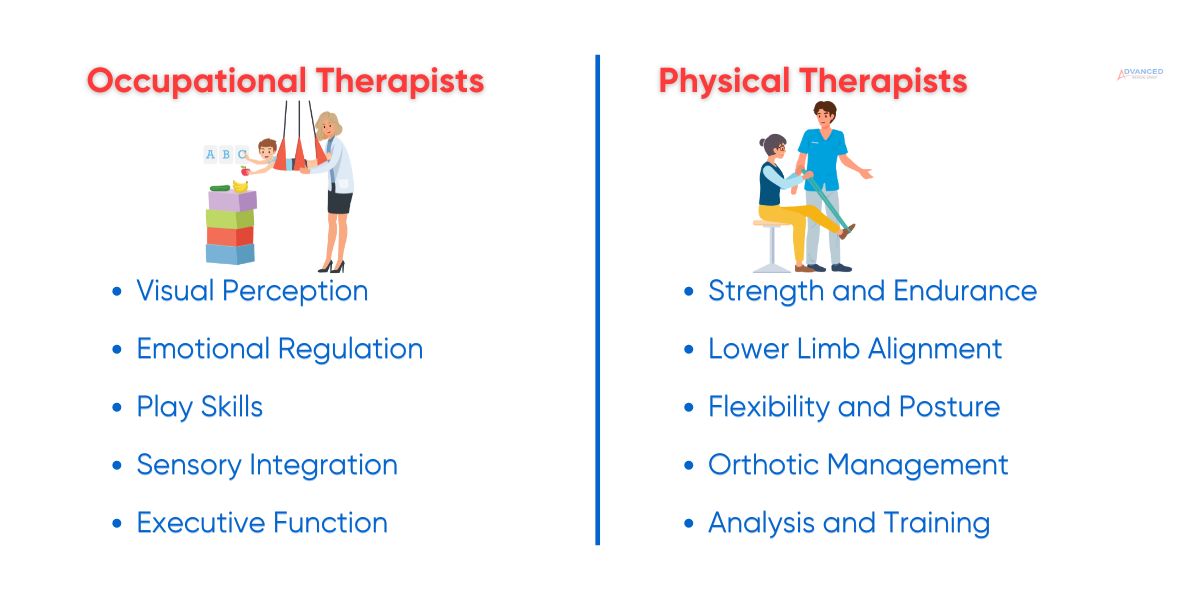
OTs and PTs are fundamental medical care experts and play distinct roles in helping patients recover from injuries, manage chronic conditions, and improve their overall quality of life. While their work might cover certain areas, there are huge contrasts in their concentration, treatment approaches, and objectives. The following are the most basic differences between OTs and PTs:
Qualifications And Experience
OTs normally have a master’s degree in occupational therapy. In this initiative, doctoral programs are becoming more frequent. They must perform substantial clinical fieldwork as part of their lessons. They are trained to evaluate and treat patients completely. They focus on their capacity to conduct daily tasks.
PTs must also hold a bachelor’s degree in physical therapy from a recognized college. PTs, like OTs, must complete clinical rotations and hands-on training. Physical therapists detect physical abnormalities and movement dysfunctions. They concentrate on increasing physical mobility and function.
Scope Of Practice
Occupational therapists assist patients in doing daily activities independently and easily. They work with patients of all ages to overcome their physical, cognitive, and emotional challenges. It restricts their capacity to engage in daily activities. It used such common therapies as teaching adaptation strategies, prescribing assistive devices, and changing the environment to increase independence.
Physical therapists assess and monitor the fitness progress of a patient with the help of therapeutic exercises and techniques. They help to improve movement and manage functional mobility problems such as muscle weakness, joint stiffness, and balance deficits. In addition to this, PTs frequently work with patients to recover from surgery, injuries, or neurological problems. It enhances their strength, flexibility, and mobility.
Treatment Focus
OTs use interventions of splinting, ergonomic examinations, and cognitive rehabilitation strategies. They implemented activities of daily living (ADLs). It helps patients to overcome their mental limitations. This promotes good health and positive well-being in everyday life.
They evaluate and provide treatment for persons with health problems and disabilities from injury, disease, overuse of muscles or tendons, pain, or loss of a body part. They specialize in physical movement and functional quality of life. It increases mobility and alleviates pain. They work closely with patients through personalized exercise programs. It regains a varied range of motion, strength, and capacity.
Community Preferences
OTs treat patients of any age, from newborn children to the elderly. They assist individuals with various illnesses, for example, developmental delays, neurological problems, emotional well-being issues, and physical wounds.
PTs work with patients, all things considered, and spend significant time on outer muscle wounds, neurological illnesses (like stroke and spinal cord injury), and the muscular system. They often work in offices like short-term facilities, medical clinics, and restoration focuses.
Collaborative Approach
OTs interact with other healthcare professionals. For instance, physical therapists, speech therapists, physicians, and social workers are their partners. They provide comprehensive patient care. It improves the ability of patients to participate in everyday activities and tasks.
Physical therapists work with occupational therapists and other experts. They handle a patient’s overall recuperation needs. It emphasizes restoring physical mobility and function. This assists a patient in going back to everyday life and work.
How Do You Decide If You Need PT or OT?
Why Do You Need Physical Therapists?
Physical therapy boosts physical function, mobility, and strength.
Movement Restriction
A physical therapist helps you to increase your functional ability. So that you can forget your troubles while walking, standing, or maintaining balance.
Recovery From Surgery Or Injury
Physical therapy is frequently suggested following operations like joint replacements or injuries like fractures or sprains. These improve the strength, flexibility, and emotional range of a patient.
Chronic Pain
Chronic pain eventually harms every aspect of a patient’s life and creates long-term disorders and bad outcomes. Physical therapists are accustomed to dealing with this. They trained different exercises and strategies to manage pain and function better for a patient.
Why Do You Need Occupational Therapists?
Occupational therapists assist patients in performing everyday activities independently.
Difficulty With Daily Tasks
Occupational therapy (OT) may assist you in performing daily activities because of injuries and other health issues, It teaches you adaptive skills and employs assistive technologies to become more independent.
Cognitive Or Emotional Barriers
Cognitive impairments are mainly memory loss, difficulty concentrating, anxiety, and depression. These can limit your capacity to function. Occupational therapy (OT) aids you in overcoming these challenges.
Chronic Conditions
A chronic ailment may decrease your capacity to participate in work, leisure, or social activities. Occupational therapy can help you to manage stroke recovery, mental health issues, and cardiac disease recovery.
Developmental Delays Of Children
Occupational therapy arranges collaborative activities that support teamwork and communication. These activities facilitate children with developmental delays or disabilities to develop social skills.
Improved Health Through Occupational And Physical Therapists
Both therapists at Advanced Medical Group offer different skills and approaches to patient care. OTs increase everyday independence and address cognitive and emotional barriers. Whereas PTs improve physical mobility and function through specialized therapy. These differences should be understood to receive the best therapies for your requirements.
Don’t wait! Consult a healthcare practitioner now to learn more about how occupational or physical therapy can benefit you!