 Patient Login
 (201) 581-6100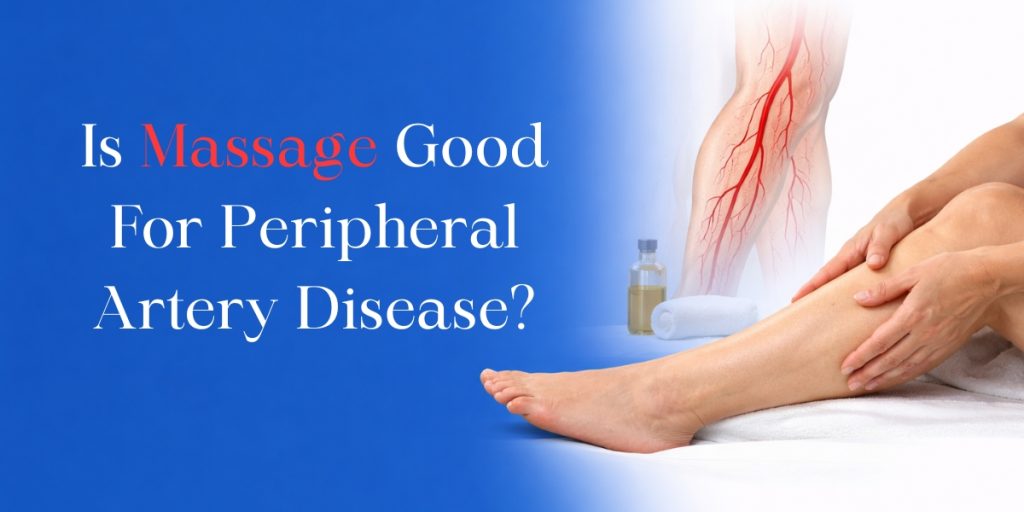
Patient Information About Is Massage Good For Peripheral Artery Disease?
Is massage good for peripheral artery disease? It’s a question many people ask after getting diagnosed with PAD.
And it’s especially common when leg pain becomes so intense that it starts interfering with daily activities.
But to understand whether massage therapy is an effective treatment, you first need to understand what the disease is all about.
Peripheral artery disease develops when plaque builds up inside the arteries. These arteries carry blood to the legs.
When these arteries get narrow or blocked, blood flow becomes restricted. This reduced circulation causes symptoms such as leg pain, muscle cramps, and heaviness.
Does that mean massage therapy can’t help at all? That’s precisely what we’re going to discuss here.
The Questions and Answers To: “Is Massage Good For Peripheral Artery Disease?”
Before deciding whether massage can help, you need to look at what it actually does to your body. Yes, massaging can improve circulation, but the circulatory issues caused by PAD disease are very specific.
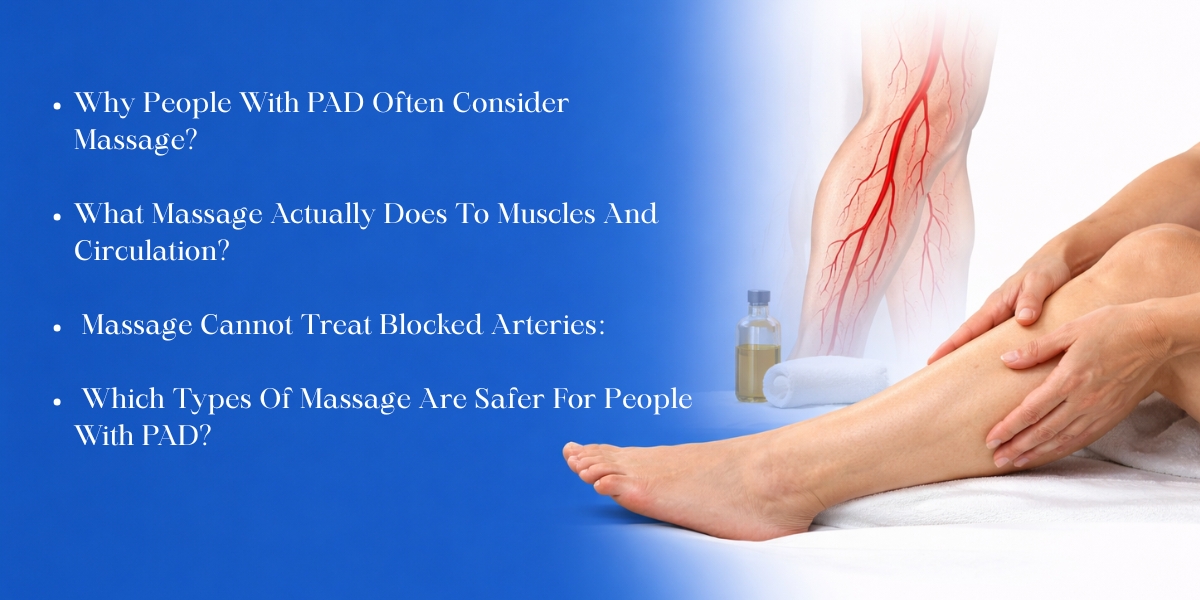
Why People With PAD Often Consider Massage?
Leg discomfort is among the first signs of PAD. The most common symptom is pain in the calves while walking. Doctors call this claudication. The pain usually occurs during movement and goes away after a few minutes of rest.
Over time, this pattern can make your legs feel constantly tired or tight. Some people also notice heaviness, cramping, or stiffness in the muscles.
Because of these symptoms, it’s easy to assume that the problem is in the muscles. That’s when most people turn to massage therapy in the hopes of fixing the issue.
Massaging the area relieves muscle tension and improves circulation in the soft tissue. That combination offers some much-needed relief.
But that relief is temporary. PAD is not simply a muscle issue. The condition affects arteries that cannot be repaired with massage therapy. Understanding that distinction is key.
What Massage Actually Does To Muscles And Circulation?
So, is massage good for PAD or not? The answer to that question isn’t as straightforward as you may think. For a more honest view, let us break down the effects of a massage on the body.
First, massaging the tissue helps relax muscle fibers. This can reduce tightness and make the area feel less stiff. Second, the massage temporarily increases blood flow in the surface tissues.
The pressure and release action stimulate the small blood vessels near the skin. When these vessels widen, more blood reaches the surrounding muscles.
Massage can also improve circulation by helping the blood move back toward the heart. That’s why you feel warm and relaxed after getting a massage.
These effects can make your legs feel lighter and more comfortable for a while. But when you have PAD, the symptoms return soon after.
Massage Cannot Treat Blocked Arteries:
Even if massage provides temporary relief, it doesn’t address the underlying cause of the symptoms. Massaging the area will not get rid of the plaque from inside the arteries.
Massaging also cannot widen a narrowed artery or restore normal blood flow through the blocked arteries.
To manage symptoms, you need to treat the root cause. And that only happens with the right PAD treatment.
Which Types Of Massage Are Safer For People With PAD?
Not all massage techniques apply the same level of pressure. And that difference matters for people with PAD.
Because circulation in the legs is already compromised, techniques that use heavy pressure may place unnecessary strain on the surrounding tissues.
Gentle massage methods use light to moderate pressure and focus on relaxing the muscles. These approaches are generally safer for people with peripheral artery disease.
Lymphatic-style massages may also be good. These techniques use very light, rhythmic movements to encourage fluid movement in the body. This will not help clear your arteries, but it can offer some relief.
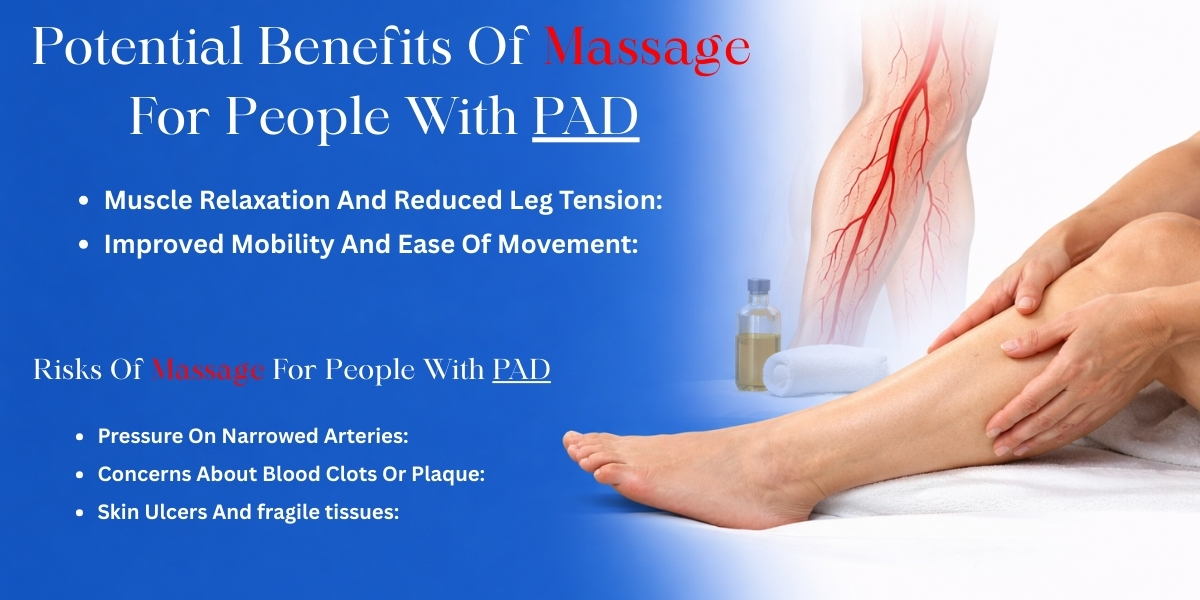
Potential Benefits Of Massage For People With Peripheral Artery Disease
Massage cannot treat PAD itself. But that doesn’t mean it has no value at all. When used carefully and with realistic expectations, massage therapy may still offer certain supportive benefits.
Muscle Relaxation And Reduced Leg Tension:
When blood flow to the legs is limited, the muscles have to work harder during everyday activities. That’s why even a short walk can tire out your legs.
Over time, this added strain can create persistent tension in the surrounding muscles. As a result, the muscles in your legs may feel stiff, sore, or overly sensitive after activity.
Massaging the area can then relax the muscles. The pain may go away for a while, and your legs may feel less stiff.
For those living with constant pain and discomfort, that relaxation can feel heavenly, even if it lasts a short time.
Improved Mobility And Ease Of Movement:
In the early stages of the condition, PAD symptoms primarily appear during movement. So, most people try to avoid walking or moving.
While that helps avoid pain, it actually does more harm than good. Being inactive makes circulation even worse. Over time, it weakens your muscles and increases pain.
Getting daily massages can help relieve the pain. So, that makes walking or moving less painful, at least temporarily.
Risks Of Massage For People With PAD
Massage is usually harmless, especially when it’s used to relieve muscle tension. But for people with peripheral artery disease, certain types of massage can carry risks.
Because the condition affects the arteries and circulation in the legs, applying pressure to these areas is not always safe.
This is why anyone with PAD should approach massage carefully and only consider it after discussing it with a healthcare provider.
Pressure On Narrowed Arteries:
In PAD, the arteries that carry blood to the legs have already become narrowed. Applying strong pressure to areas may place additional stress on the surrounding blood vessels. In some cases, this could temporarily reduce blood flow even further.
A gentle massage may help some. But you need to be careful about getting deep tissue massages that apply constant pressure to the legs.
Concerns About Blood Clots Or Plaque:
People with vascular disease may also have a higher risk of blood clots. There’s the risk of unstable plaque within the arteries as well.
Aggressive massage techniques, particularly deep tissue massage, can place significant mechanical pressure on the underlying tissues. In theory, this can disturb the fragile vascular structure and create complications.
Because of this, healthcare providers often recommend against deep tissue massages for people with PAD.
Skin Ulcers And fragile tissues:
In the most advanced stages of PAD, the lack of blood flow starts affecting the skin and underlying tissues. Some develop sores and ulcers on their lower legs. And because of poor circulation, these wounds don’t heal quickly.
These areas are especially vulnerable to injury. Massaging over fragile skin, open wounds, or ulcerated areas can worsen tissue damage even further.
Seeking The Right PAD Treatment Beyond Massage
Massage may offer some momentary relief from pain, but it doesn’t treat the main issue. If you’ve been diagnosed with PAD, it’s crucial that you begin treatment right away.
Specialists at Advanced Medical Group diagnose peripheral artery disease and help patients find the right treatment based on their condition. Seeking expert care early can play an important role in managing PAD.