 Patient Login
 (201) 581-6100
Understanding The Stages Of Chronic Venous Insufficiency
If you or a loved one has recently been diagnosed with chronic venous insufficiency, it’s only natural that you’ll wonder how the disease progresses over time.
That’s why you need to have a fundamental understanding of the different stages of chronic venous insufficiency. It can help you figure out how advanced your diagnosis is and what to expect next.
There are different stages of chronic venous insufficiency. At first, the signs may be subtle. You might notice your legs getting tired or heavy after standing for long periods.
Over time, the symptoms can progress to swelling and skin changes. In some severe cases, the patient may even develop open sores called venous ulcers.
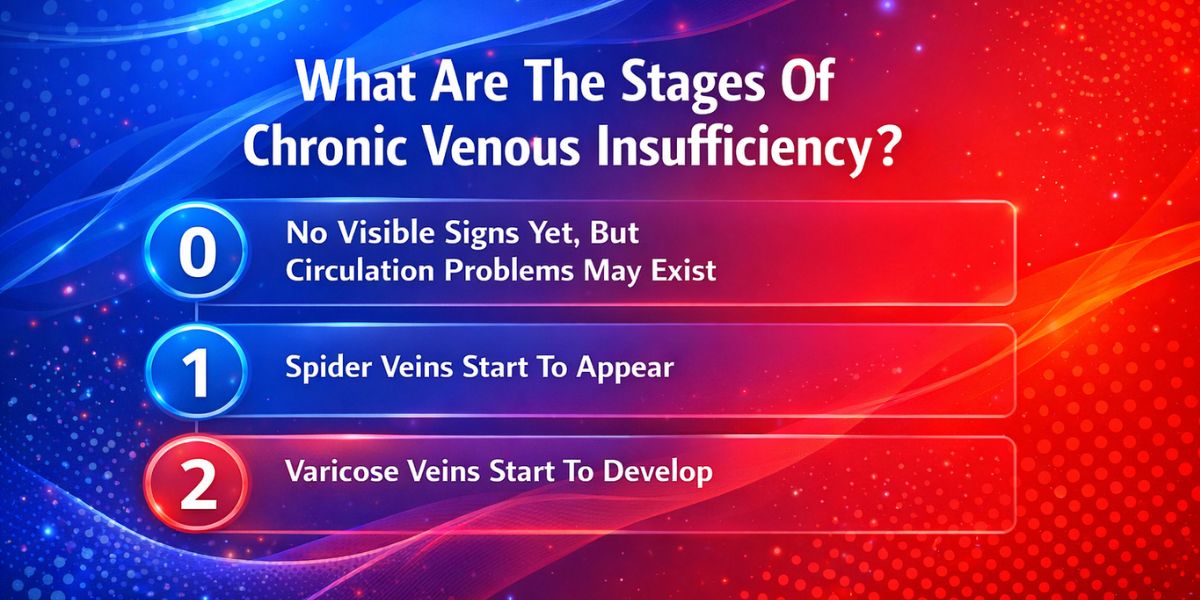
What Are The Stages Of Chronic Venous Insufficiency?
Healthcare professionals explain CVI by looking at how the condition develops over time. This progression is divided into several stages based on the symptoms and visible changes in the legs.
So, what are the different stages of chronic venous insufficiency? The different stages basically describe how the disease gradually worsens as the function of the veins declines. Each stage reflects how much the circulation has been affected in the leg veins.
Stage 0: No Visible Signs Yet, But Circulation Problems May Exist
At the earliest stages of CVI, you may notice any visible changes in the veins. Your legs may look completely normal on the surface.
However, there may already be circulation issues developing in the veins. At this stage, the valves are just starting to weaken. It may even be enough to affect blood flow.
At this stage, many people notice subtle symptoms. Your legs may feel tired, heavy, or achy. You may also experience mild cramping or discomfort.
Because there are no visible signs yet, you may be tempted to ignore these as just everyday fatigue. In reality, they may represent the earliest indication of CVI.
Stage 1: Spider Veins Start To Appear
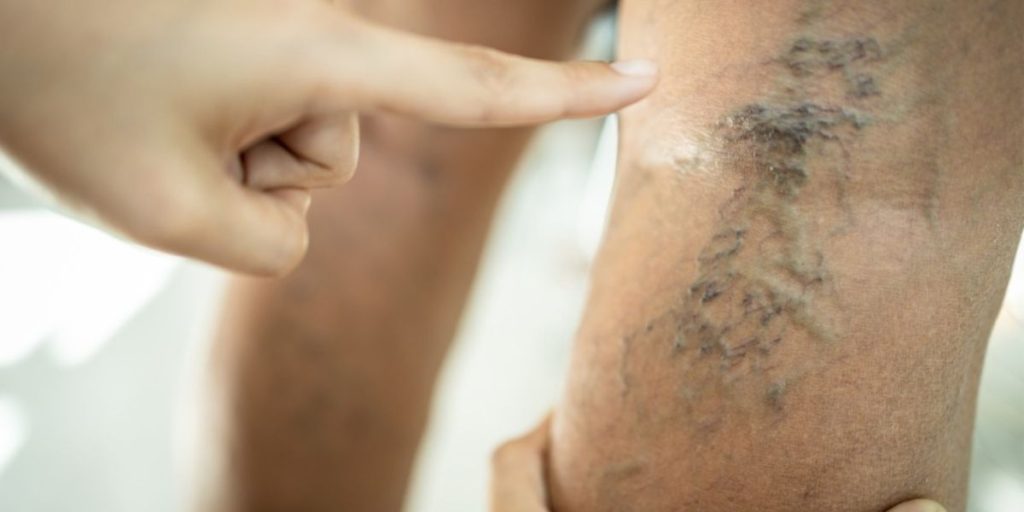
As the condition progresses, pressure starts building up inside your veins. That’s when you may start noticing small spider veins on your legs.
These are thin blood vessels that make web-like patterns on the legs just under the skin. They may look red, blue, or purple.
For many people, spider veins are primarily a cosmetic concern. However, they can also indicate that the veins are beginning to experience increased pressure.
At this stage, you may notice some mild symptoms after standing for long periods. These may include itching, burning, or slight discomfort around the visible veins.
Stage 2: Varicose Veins Start To Develop
In the next stage, the vein changes become more noticeable. Larger veins begin to swell and twist under the skin. You may know this condition as varicose veins.
Varicose veins develop when weakened valves allow blood to flow backward and collect inside the veins. As pressure builds, the veins enlarge and become visibly raised.
The symptoms may also become more persistent at this stage. Many people experience aching legs, throbbing, heaviness, or fatigue after standing for extended periods.
Swelling around the ankles may also appear, especially later in the day. For many patients, this is the point when the symptoms become difficult to ignore.
Early Stages Of Chronic Venous Insufficiency Symptoms
When venous insufficiency doctors talk about the early stages of CVI, they are usually referring to Stages 0 through 2. At these stages, the damage has already begun, but serious complications have not yet developed.
It’s crucial to recognize these early-stage symptoms. The sooner CVI is diagnosed, the easier it is to manage. The tricky part is that the symptoms are extremely difficult to track.
That’s mainly because they may come and go. Most of the time, they may improve with rest. So, it’s easy for most people to dismiss it.
Fatigue And Heaviness:
One of the most common symptoms at this stage is a feeling of heaviness. You may feel a dull pressure, or your legs may feel tired as the day goes on.
You may notice it more after standing or sitting for long hours. By evening, your legs may feel uncomfortable or completely tired.
It happens because circulation has slowed down so much that blood is starting to pool in the lower legs. Keeping your legs up may provide some temporary relief.
Mild Swelling Around The Ankles:
Another early sign is mild swelling. It may be mostly present around the ankles and lower calves.
At first, you may notice the swelling at the end of the day. It may go away overnight while you are lying down. Shoes and socks may feel slightly tighter than usual.
The swelling is subtle at this stage. So, people usually assume that it’s because of prolonged standing or heat. But if your ankles look swollen very often, it’s time to take it seriously.
Visible Changes In The Veins:
In the early stages, the visible signs may be small. It starts with spider veins. In Stage 2, larger varicose veins may appear.
Even if the physical discomfort feels mild, the fact that there are visible changes often means that the pressure inside the veins has increased. And it often happens because of an underlying malfunction of the valves.
Advanced Stages Of Chronic Venous Insufficiency
When the condition reaches the advanced stages, the changes become more serious. The increased pressure inside the veins starts affecting the surrounding tissue and skin.
When that happens, you may start noticing the following symptoms:
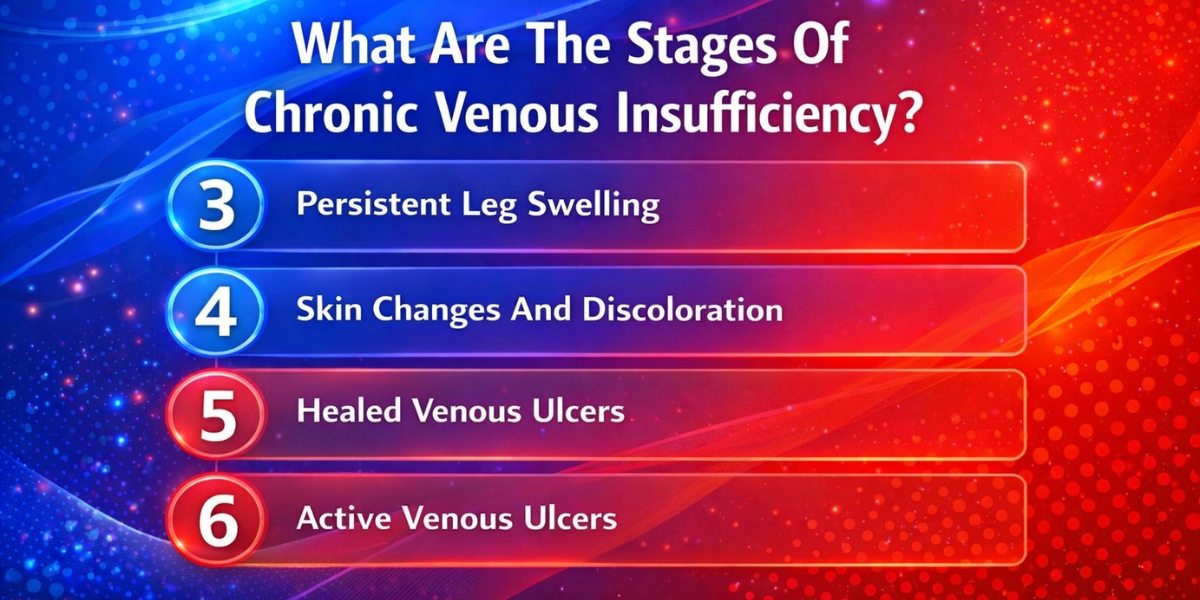
Stage 3: Persistent Leg Swelling
By Stage 3, the swelling becomes more consistent. You may notice that your ankles and lower legs stay swollen even after a night’s rest.
At this stage, you may feel even greater discomfort. Your legs may feel tighter, heavier, and more tender to the touch.
Stage 4: Skin Changes And Discoloration
When the pressure inside your veins stays high consistently, the skin itself begins to change. You may notice areas of darkened or brownish skin.
The skin may also become dry, itchy, or inflamed. Some patients develop a condition called stasis dermatitis. Here, the skin looks red, irritated, and sensitive.
By Stage 4, you should have already started venous insufficiency treatment.
Stage 5: Healed Venous Ulcers
In Stage 5, you may notice an ulcer that had formed sometime back but has healed since.
But even though the wound has closed, you may notice the skin is fragile. The area may look scarred or discolored.
At this point, there is a high risk of another ulcer forming if you don’t begin treatment. So, make sure to look for venous insufficiency treatment in NJ.
Stage 6: Active Venous Ulcers
Stage 6 is the most advanced stage of CVI. In this stage, patients develop open sores, typically near the inner ankle. The ulcers can be painful and may drain fluid.
It may take weeks or even months to heal these ulcers. In some cases, infection may develop if the wound isn’t treated properly.
Timely diagnosis And treatment Are Crucial In managing CVI
Chronic venous insufficiency is a progressive condition. It does not usually improve on its own. Getting the right diagnosis and treatment is crucial for recovery.
For patients in New Jersey, Advanced Medical Group offers comprehensive evaluation and modern vein care tailored to the stage and severity of the condition.