 Patient Login
 (201) 581-6100
Understanding Peripheral Artery Disease And Intermittent Claudication
Peripheral Artery Disease (PAD) is a prevalent circulatory disorder in which arterial constriction, often attributed to atherosclerosis, decreases blood flow to limbs, mostly to legs. Just imagine you find yourself on a walk, and suddenly you feel sharp and cramping pain in your legs, which makes you stop immediately. It helps a little when you rest, then it comes again when you take your next few steps. It is not necessarily fatigue, but it might be indicative of PAD. This happens when blood flow is reduced by narrowed arteries, which often causes a very painful symptom called intermittent claudication. When you know about the early warning signs, you can save your health and remain active in the future.
What Is Peripheral Artery Disease?
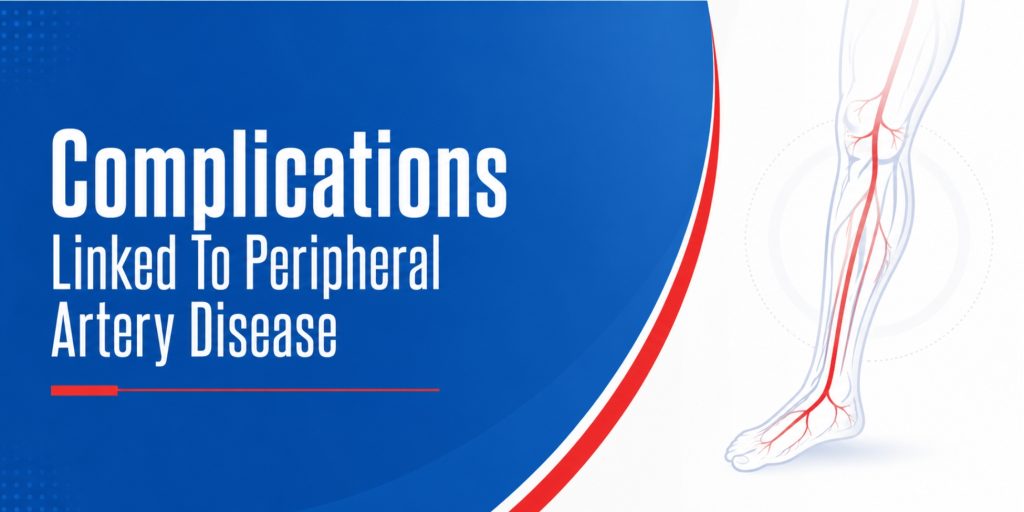
It is a serious but very common condition in which the blood vessels that send blood to the extremities, such as the legs, are narrowed or blocked. The primary trigger is atherosclerosis, or a blockage of fat deposits (plaque) within the inner walls of the artery, which decreases blood flow. Several symptoms and complications may follow if there is insufficient oxygen supply to the leg muscles during physical activity.
Although technically, PAD does not involve veins or lymphatics, it is sometimes known as Peripheral Vascular Disease. It mostly occurs in the legs; it is also possible to affect the arms, but less frequently. Individuals with PAD have an even higher chance of heart attack and stroke, since the vascular damage is frequently not localized to the limbs.
Peripheral Artery Disease causes include atherosclerosis (hardening or narrowing of arteries), diabetes, smoking, high blood pressure, cholesterol, and aging. PAD can happen to anyone, but chances are greater as we age, smoke, have diabetes, or have heart or arterial disease. The most important thing is early detection to avoid progression and complications.
What Is Intermittent Claudication? The Classic PAD Symptom
Pain, cramping, or an aching feeling in the legs during movement or walking that subsides with rest is medically termed as intermittent claudication. This is because constricted arteries cannot transport enough oxygenated blood to the active muscles. The pain may be mild to severe and may extend to both legs, with one limb sometimes more often than the other.
We can explain peripheral artery disease and intermittent claudication to be often classified and experienced as leg pain, cramps, or fatigue that are triggered by physical activity, such as walking. And it can subside when you rest your legs. This discomfort most commonly affects the calves, but it can also occur in the thighs or buttocks. However, intermittent claudication is the classic symptom of peripheral artery disease; not all patients with PAD experience it.
In fact, many individuals with PAD may not have any apparent symptoms, making the condition difficult to detect in its early stages. However, intermittent claudication remains a strong warning sign that should prompt further medical evaluation for underlying circulatory problems.

Recognizing The Signs And Getting Diagnosed
PAD symptoms may be mild and progress over time. Although intermittent claudication is the most commonly known symptom, other symptoms can be identified:
- Heaviness, weakness, or numbness of the legs
- Skin that is shiny, pale, or bluish
- Coldness in the lower leg or foot, one foot colder than the other
- Loss of hair on legs and feet
- Slow-growing, brittle toenails
- Sores or open wounds that are slow to heal on the feet or legs
- Muscle wasting in the lower legs
- Erectile dysfunction in men
In severe cases, blood flow may be so limited that you have pain at rest, non-healing sores, or infections that can lead to tissue death (gangrene). Severe symptoms may represent a medical emergency that should be addressed immediately.
By learning the PAD symptoms early and being aware of what peripheral artery disease is, you can take the necessary steps before the onset of complications.
How Is PAD Diagnosed?
There are several methods that doctors can employ to verify a PAD diagnosis:
- Medical and family history will assess risk factors and symptoms.
- Testing pulses in the legs and feet
- The Ankle-Brachial Index (ABI) is used to compare blood pressure in the ankle and arm to detect blockages.
- Ultrasound, CT, or MR angiography is performed, helping in visualizing blood flow and artery structure.
- Blood tests are carried out to examine high cholesterol, diabetes, or inflammation.
A correct diagnosis helps in planning an optimal action plan for peripheral artery treatment.
Managing PAD And Intermittent Claudication
The goals of the peripheral artery treatment are to alleviate the symptoms, enhance the quality of life, and avoid heart attack, stroke, or amputations as complications. PAD does not have a cure at present, but a multifaceted approach can help manage the condition.
Lifestyle Changes
- To slow down the progress of the disease, smoking should be quit.
- Regular exercise programs (walking with supervision) help in reducing symptoms.
- A balanced diet has to be followed that lowers cholesterol and assists in controlling diabetes and blood pressure.
- Regulation of weight and reduced alcohol consumption
Medications
Doctors can prescribe medicines to:
- Lower cholesterol using statins.
- Lower blood pressure
- Prevent blood clots by prescribing antiplatelet agents like aspirin.
- Improve walking symptoms by prescribing cilostazol or pentoxifylline.
The PAD treatment cost is highly variable and depends on the treatment method, geographic area, and complexity. Medications and prescribed exercise are less expensive options, but angioplasty, stents, and surgical bypass operations may prove even more costly.

Surgical And Interventional PAD Treatments
Unless lifestyle changes together with medications suffice, procedures might be required:
- Angioplasty and stenting introduce a tiny balloon that opens the narrowed artery, sometimes followed by a stent to keep it open.
- Using a blood vessel graft, bypass surgery creates a new path around a blocked artery.
- Other endovascular treatments include atherectomy (plaque removal).
With the help of specialized centers such as Advanced Medical Group, you will be able to learn about individualized treatment plans and how much they can cost.
Don’t Let PAD Steal Your Steps—Take Action Today!
Peripheral artery disease represents more than mere leg pain. Still, it is an indication of a far-reaching circulatory illness that may cause the removal of a limb or even a heart attack. Equipped with swift diagnosis and holistic treatment provided by artery and vein specialists such as Advanced Medical Group, you can reinstate your quality of life.
Don’t ignore persistent leg pain or signs of poor circulation. If you suspect PAD, get evaluated and take positive steps toward wellness. Explain PAD to your loved ones, seek specialized peripheral artery treatment, and don’t let PAD stand in your way—your next procedure may be the most significant in your future well-being.