 Patient Login
 (201) 581-6100
Effective Nursing Diagnoses For Peripheral Arterial Disease Care
Peripheral Arterial Disease is a disorder that causes structural damage to a patient’s blood vessels, and plaque blocks blood flow due to atherosclerosis. The primary effects of PAD are narrowing down a patient’s arteries and limiting blood flow. In severe cases, this condition can result in cramps, limb pain, and even tissue damage.
Generally, PAD affects the patient’s legs and feet. However, it can also affect any blood vessels outside of the heart. So, before it becomes critical, it’s important to detect this disease earlier and make significant health changes.
Nursing diagnosis can help patients with this extremity quite efficiently. PAD treatment doctors and nurses work together to manage PAD by creating care plans, conducting initial evaluations, and executing interventions that address PAD patients’ mental and physical requirements.
We’ll be talking about important peripheral artery disease therapies in detail in this post. So, without further ado, let’s begin, then!
Top 6 Nursing Diagnosis For PAD
Peripheral Arterial Disease (PAD) is a serious cardiovascular condition that needs careful planning and thorough nursing assessments. PAD patients’ care includes multiple conservative methods such as medical interventions, structured walking exercises, and lifestyle changes.
Let’s understand the potential PAD nursing treatments prescribed by the specialists:
Chronic Pain
It illustrates ongoing discomfort associated with reduced blood supply to the troubled leg or limbs. PVD/PAD is a chronic pain disorder whose potential symptoms are:
- Neuropathic (described as burning, tingling, or shooting pain)
- Ischemic (severe, constant pain, particularly in advanced PAD stages)
- Intermittent claudication pain (commonly felt as cramping or aching in the calves, thighs, or buttocks)
Nursing Interventions
- Use a standardized pain scale to assess the level of pain consistently and modify interventions according to patient input.
- Use pharmaceutical tools, like analgesics and antispasmodics, to reduce discomfort.
- Make use of drug-free pain-reduction techniques like warm compresses or relaxation techniques.
- Inform patients about lifestyle modifications that can gradually reduce pain, such as quitting smoking and managing weight.
Ineffective Tissue Perfusion
It means reduced tissue function due to decreased blood supply to the extremities. It characterizes the absence of oxygen-rich blood flow to certain body parts.
The potential signs and symptoms that support the nursing diagnosis are
- Weak or absent pulses
- Intermittent claudication (discomfort brought on by insufficient blood flow during exercising)
- Cold extremities
- Delayed capillary refill, and Skin discoloration.
Nursing Interventions
- Advise that stopping smoking helps prevent further restriction of the blood vessels.
- Monitor and note the skin temperature, capillary refill time, and peripheral pulses.
- Prescription treatment is with either statins or antiplatelet drugs to ensure proper blood circulation and prevent thrombosis formation.
- Regular, moderate exercise enhances blood circulation and, consequently, improves symptoms of PAD.
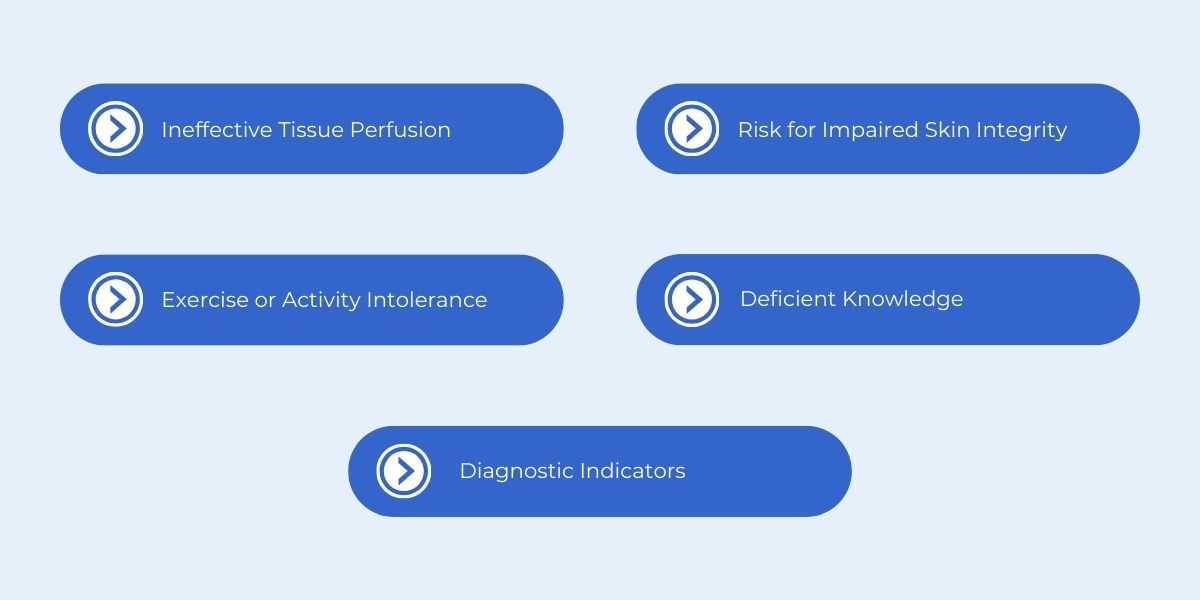
Risk For Impaired Skin Integrity
This will point to an increased risk of skin breakdown from impaired blood flow, causing ulcers and slow healing. Signs and symptoms that support this nursing diagnosis include:
- Non-healing wounds or ulcers
- Hair loss on the legs
- Thin, shiny skin, and
- Decreased sensation in the affected areas.
Nursing Interventions
- Look for indications of skin deterioration every day, especially in high-risk regions like the toes and heels.
- To avoid infection and cracking, keep your skin clean, dry, and moisturized.
- Teach patients how to take care of their feet, which includes avoiding tight shoes and checking their feet every day.
- Consult wound care professionals if required, particularly for patients with severe PAD who are more susceptible to ulcers.
Exercise Or Activity Intolerance
It draws attention to decreased physical capacity brought on by pain and poor blood flow, which results in restrictions in day-to-day activities and is referred to as exercise or activity intolerance.
The potential signs and symptoms are:
- Exhaustion
- Dyspnea while exerting oneself and
- The incapacity to carry out ADLs without experiencing severe discomfort.
Nursing Interventions
- Promote progressive, slow exercise to increase circulation and tolerance. Patients with PAD are frequently advised to participate in walking programs.
- If required, instruct assistive technology and energy-saving methods.
- To prevent overexertion, plan activities for when the patient is most energetic and strike a balance between rest and activity.
- Work together with physical therapists to create a customized training program that takes into account the patient’s objectives and limits.
Deficient Knowledge
It entails ignorance or misinterpretation about PAD, how to manage it, and how crucial lifestyle changes are. Signs and symptoms include persistent high-risk behaviors like:
- Smoking
- Noncompliance with treatment programs and
- An inability to express the significance of prescription medications.
Nursing Interventions
- Give thorough instruction on PAD, including its causes, symptoms, and the long-term effects of untreated disease.
- Highlight the value of adherence while educating patients on the advantages of diet, exercise, and medicine in the management of PAD.
- Help patients understand their condition and available treatments by using interactive tools and visual aids.
- Encourage self-monitoring of symptoms and set attainable goals to empower patients to actively participate in their care.
Diagnostic Indicators
To perform accurate nursing diagnosis for peripheral arterial disease, the assessment of blood flow and identification of blockages is necessary. The Ankle-Brachial Index (ABI) is a key measure for this condition, that has the following measurements :
- Normal: 1.0-1.4
- Mild PAD: 0.9-0.7
- Moderate PAD: 0.69-0.4
- Severe PAD: <0.4
In addition, imaging tests like Doppler Ultrasound, Arteriography, CT Angiography, and MR angiography are used to confirm the diagnosis and evaluate the severity of the patient. These tools help PAD treatment specialists to design targeted interventions for effective management.
Nursing Care For Peripheral Arterial Disease
A well-conducted nursing diagnosis will always precede a precise management process in the effective care of a patient with Peripheral Arterial Disease.
For effective PAD treatments, nurses are keenly looking for these aforementioned issues to handle the unique challenges of the patients.
Complete and dedicated care from nurses does not only reduce symptoms but also improves the quality of life for patients.
Advanced Medical Group (AMG) supports healthcare professionals with the latest tools and resources, which helps them deliver excellent care and improve patient outcomes in the management of PAD.