 Patient Login
 (201) 581-6100
Managing Peripheral Artery Disease With Self-Care
Peripheral Artery Disease, also known as PAD, makes it difficult for your blood to reach a few body parts, most commonly the extremities. This is due to the narrowing of blood vessels caused by fat build-up.
Also known as atherosclerosis, this narrowing of arteries often results in pain in the legs, arms, or back, thus lowering the quality of life. While PAD is often treated with medications and therapies, your lifestyle factors play a crucial role in the management of the disease.
By improving your diet, incorporating physical exercises, and managing your general health, you can reverse PAD and even prevent surgical treatments. Explore the best self-care tips for PAD management and treatment below.
Peripheral Artery Disease Self-Care
In most cases where the problem hasn’t progressed to extreme stages, PAD can be managed with the help of some lifestyle changes. These self-care habits can help prevent as well as treat it to a large extent.
However, if the disease has progressed, you must pair these lifestyle tips with the proper PAD treatment suggested by your medical practitioner.
Some self-care tips for peripheral artery disease include:
1. Smoking Cessation
Since tobacco and tobacco products contribute to plaque build-up in your arteries, it is vital to quit their use. You can ask your healthcare provider for smoking cessation programs.
2. Limit Alcohol Intake
Another contributor to atherosclerosis, alcohol can have a negative impact on your health. Therefore, it is best to limit its intake to a minimum.
3. Manage Your Weight
Plaque build-up in the arteries is generally associated with high cholesterol content in the body, which also causes weight gain. Therefore, it is important to maintain a healthy weight to prevent further complications and improve your arterial health.
You can consult your physician or dietician for a balanced diet chart and exercise recommendations to help you lose weight in a healthy manner.
4. Start Walking Regularly
Creating and following a regular walking program can help improve your blood flow and prevent the leg pain associated with PAD. You should generally walk for 30 to 60 minutes, starting at a pace that doesn’t cause leg pain and then increasing the speed to bear mild or moderate discomfort. Make sure to take plenty of rest after the walk.
Alternating activities and resting in intervals will help improve the time you can walk without pain. You can consult a rehabilitation centre for help with the same.
5. Manage Your Health
People with health conditions like high blood pressure, high cholesterol, and diabetes are at a higher risk of PAD. Therefore, managing these conditions with the help of your healthcare practitioner is important.
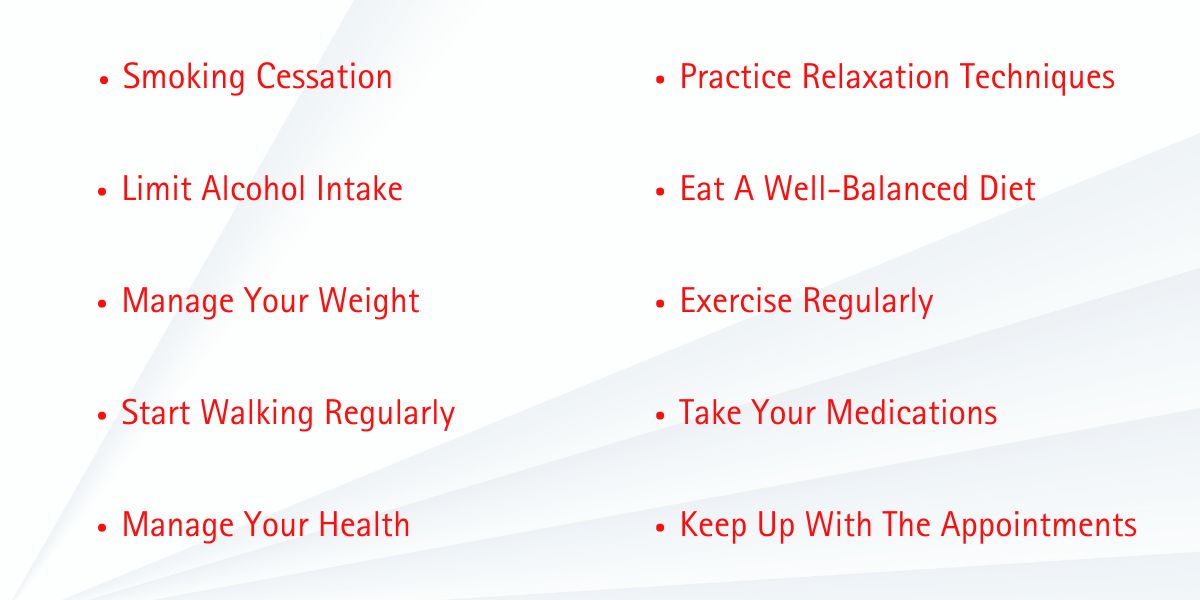
6. Practice Relaxation Techniques
It is vital to manage your stress to prevent aggravating the problems. You can try yoga and meditation for stress management.
7. Eat A Well-Balanced Diet
Consuming a healthy diet plays a key role in managing and treating PAD. Consume foods that are high in fiber and low in cholesterol. Moreover, limit your fat intake and avoid consumption of trans fats as this will help keep your weight in check and also reduce cholesterol levels in your body.
8. Exercise Regularly
Apart from walking, you should include other exercises in your daily regimen. It is best to consult your doctor on the activities that will best suit you, so as to not strain your body.
You can also undergo supervised exercise therapy, which generally includes leg exercises and treadmill exercise programs to help relieve your symptoms.
9. Take Your Medications
Your doctor may prescribe some medications to help relieve associated PAD symptoms, such as antiplatelet medications to prevent blood clots. In addition, you may be prescribed medications for managing any existing health conditions like diabetes and high blood pressure, which can contribute as risk factors for PAD.
10. Keep Up With The Appointments
Since it can present with complications, it is vital to visit your doctor regularly for an updated treatment regimen. A combination of self-care, medications, and exercise therapies is the best way to treat PAD.
PAD Self-Care For Feet
Since PAD most commonly affects the feet, often causing sores that don’t heal and therefore making them prone to infections and leading to tenderness, it is vital to take proper care of your feet. A few self-care tips for your feet include:
- Wear comfortable shoes and avoid compression socks.
- Check your feet for sores, cracks, cuts, or blisters daily, as they may take time to heal with PAD and lead to complications. Start immediate treatment if you see something.
- Get immediate treatment for corns, calluses, or bunions.
- Wash your feet daily and dry them properly.
- Keep your toenails trimmed.
- Apply lotion on your feet to prevent dryness.
- Always wear socks and shoes to prevent cuts and scratches.
Dietary Self-Care Tips For PAD
The diet you consume plays a vital role in the treatment of PAD as it helps keep your cholesterol under control and maintain your weight. Therefore, it is recommended to consume a balanced diet.

Here are some tips for creating the Best Diet for PAD Disease
- Include fruits, beans, vegetables, whole grains, and lean meats in your diet.
- Reduce the intake of sugar, salt, alcohol, and saturated fats.
- Avoid consuming trans fats.
- Add monounsaturated, polyunsaturated, and omega-3 fats to your diet through avocados, nuts, and fish oil.
- Consult a dietician for the best program to help you manage your weight and lower cholesterol. As the doctor suggests, you can follow low-carb diets, Mediterranean diets, or anti-inflammatory diets.
PAD Treatment By The Best Doctors
While self-care goes a long way in managing PAD, it is vital to consult PAD doctors for the right treatment plan, as the disease can lead to complications when left unchecked. At Advanced Medical Group, we offer the top specialists to help you manage the disease, all at a low PAD treatment cost. Our specialists will assess your condition thoroughly, determining its root cause, based on which they will create a tailored treatment plan. Contact us today to book an appointment and treat your diseases timely, preventing complications.