 Patient Login
 (201) 581-6100
Understanding The Difference Between Heart Attack And Cardiac Arrest
Your heart beats for you every second—love your heart before it needs healing.
The heart is the most essential organ that supplies blood to every part of the body, and human health relies on the wellness of the heart. Medical assistance becomes mandatory after a heart attack or cardiac arrest is encountered. Since both are critical cardiovascular emergencies, they need different response requirements. The severe nature of these conditions leads to their frequent interchangeability, which creates confusion among people.
Understanding these differences is crucial for providing appropriate care and improving survival rates. For the treatment of cardiovascular issues, Advanced Medical Group offers specialized services tailored to individual needs and ensures a patient-centered treatment. The article contains details about heart attack and cardiac arrest comparisons explained through definitions, triggering elements and symptoms, and outlining their discriminatory differences and response protocols.
Differences Between Heart Attack And Cardiac Arrest
Knowledge of heart attack and cardiac arrest distinctions forms a core requirement for delivering correct emergency treatment. Cardiology treatment knowledge with preventive care practices forms essential elements for acquiring better heart health.
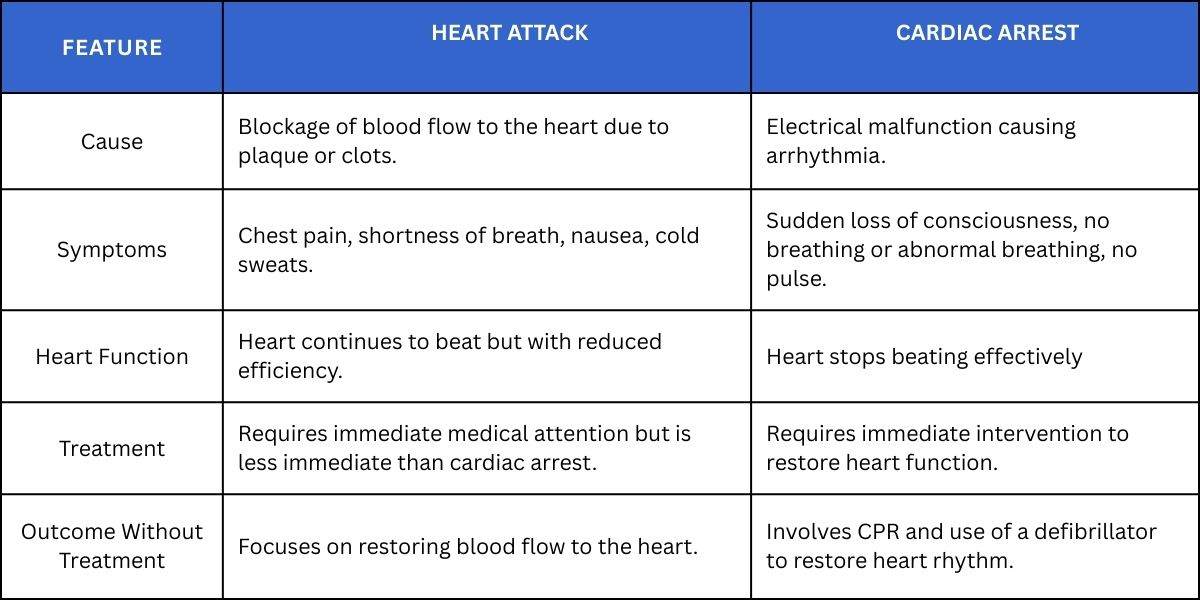
A comparison table presents the main contrasting features between heart attacks and cardiac arrests.
What Is A Heart Attack?
Heart attack refers to a myocardial infarction (MI) that represents medically the condition where blocked blood flow prevents heart muscle oxygen delivery. Atherosclerosis develops through the arteries into narrowing channels until blood clots form within the walls of the arteries. Oxygen deprivation during a heart attack causes fatal tissue damage to the heart muscle even while the heart maintains its beating cycle.
A heart attack develops due to various triggers that produce specific signs.
Causes And Symptoms Of A Heart Attack
The urgent need to recognize the causes and the symptoms demands immediate attention by analyzing these factors:
Causes
- Heart attacks mainly develop because atherosclerosis blocks arteries, leading to coronary artery obstruction.
- Blood clots develop within restricted arteries, where their growth blocks complete blood circulation.
- Age-related heart attack risk rises together with dietary choices, exercise patterns, blood pressure elevation, diabetes, and medical problems increasing the risk further.
Symptoms
- The typical sensation of heart pain presents as moderate pressure, remarkable tightness, or a dense squeezing sensation in the chest tissues.
- Shortness of breath occurs without any physical activity.
- Cold sweats lead to unexpected sweating episodes without physical exertion.
- The presence of vomiting along with nausea emerges during this situation.
- During a heart attack, the affected individual experiences intense discomfort that moves from the arms through the back and neck, ending in the jaw along with the stomach.
A heart attack shows itself in unique ways for males and females, and it takes time for symptoms to emerge, between hours before they become apparent over weeks. Seeking urgent medical help by cardiology specialists becomes necessary whenever these symptoms arise.
What Is A Cardiac Arrest?
Heart arrest creates an abrupt cardiac functional failure that leads to poor blood circulation. The electrical irregularity referred to as arrhythmia typically triggers this heart condition. A cardiac arrest develops when ventricular fibrillation causes heart rhythms to become erratic, leading to blood stoppage from the lower chambers of the heart.
Causes And Symptoms Of Cardiac Arrest
The urgent need to recognize the causes and the symptoms demands immediate attention by analyzing these factors:
Causes
- Pumping function of the heart stops because arrhythmias disrupt its normal operation and result in abnormal heart rhythms.
- Escalated risk for Coronary Heart Disease exists as one of the main medical conditions.
- Physical stress at high levels can activate cardiac arrest in vulnerable patients.
- Hereditary disorders present as one category of genetic conditions that create cardiac arrest susceptibility.
Symptoms
-
Sudden Collapse
There is a sudden collapse occurring when someone loses consciousness, followed by a fall.
-
No Breathing
The breathing of the person becomes non-existent or appears abnormal.
-
No Pulse
It refers to the heart having ceased functioning, which makes pulse detection impossible.
Cardiology treatments must begin right away because cardiac arrest ends in death when no intervention occurs.How To Respond To Both Emergencies
Heart Attack Response:
1. Call Emergency Services
Dial your local emergency services number as soon as possible. Having it handy when you are with a heart patient would help in taking quick action.
2 . Administer Aspirin
Administer an aspirin if emergency services instruct you to do so by giving it to the person for chewing.
3. Stay Calm And Comfort The Person
Save your patient by administering calm reassurance as well as comfort during their wait for medical responders.
Cardiac Arrest Response
1. Call Emergency Services
Dial your local emergency services number as soon as possible.
2. Start CPR
Perform hands-only CPR immediately, but only if you have received proper training.
3. Use A Defibrillator
Operating a defibrillator should be performed right away if you have an Automated External Defibrillator (AED) available.
The survival chances increase substantially when people take prompt medical intervention in these situations and immediately consult a cardiology doctor.
Protect And Prioritize Your Heart
Heart attacks and cardiac arrests present dissimilar causes; in fact, they have different symptom manifestations that require their unique treatment protocols.
Recognizing these unique differences is crucial for providing the right response in emergencies. You should immediately call for emergency medical help whenever you or someone under your care experiences signs of these conditions. People who need heart-related medical care should consult cardiology specialists from groups such as Advanced Medical Group, including doctors who specialize in cardiology.
The ability to recognize a heart attack from cardiac arrest reaches beyond terminology since it directly impacts survival rates. The effectiveness of your emergency response will determine how well a person survives with full recovery.